Cart 0

Table of Contents
Introduction
To picture Akrotiri before the eruption, it helps to forget ruins and timelines for a moment. This was not a site waiting to be discovered, but a working town shaped by routine, movement, and familiar spaces. People lived close together, followed daily patterns, and used the town in practical, ordinary ways.
Life here was defined by habit rather than monumentality.
A Town in Motion
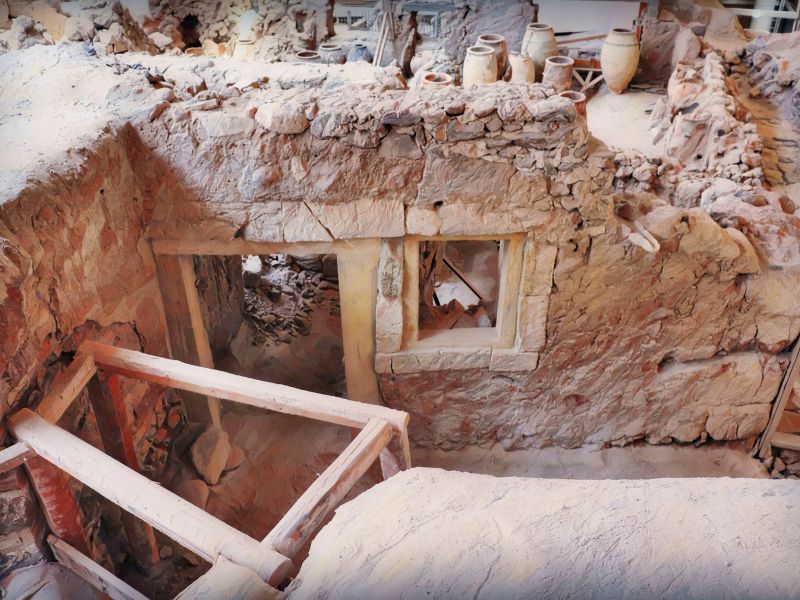
Akrotiri before the eruption was active and lived-in. Doors opened and closed. People moved up and down staircases, crossed streets, and worked inside their homes. Nothing about the town suggests emptiness or decline.
Buildings stood close to one another, creating neighborhoods rather than isolated structures. Sounds would have carried easily, and daily activity unfolded within spaces that still exist today, even if their original purpose must now be imagined.
Homes, Streets and Everyday Proximity
The layout of the town shows careful planning, but also practicality. Streets connected clusters of houses, many of them built on more than one level. Staircases linked floors, and rooms opened into one another in ways that suggest flexible use rather than rigid design.
Some areas were clearly private. Others feel shared by nature, shaped by proximity and repeated encounters. Akrotiri before the eruption appears as a place where closeness was normal, not exceptional.
Work, Storage and Daily Needs
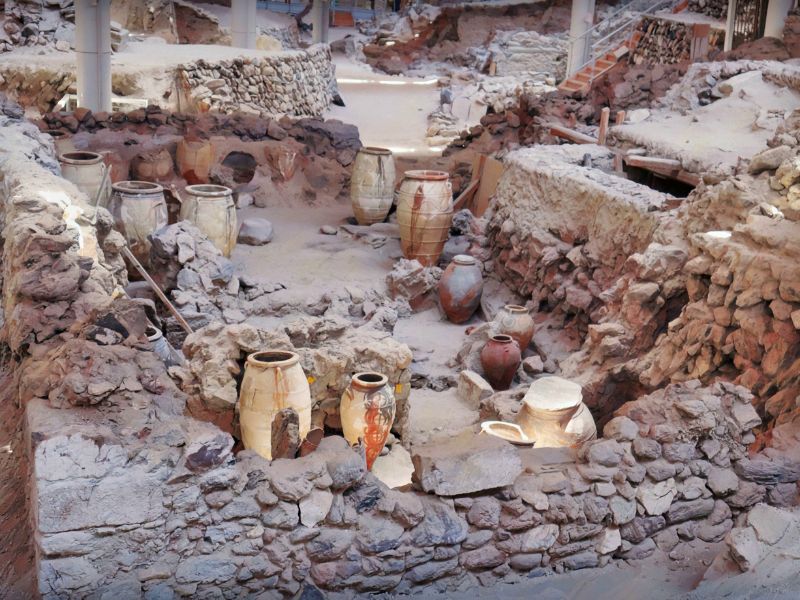
Life followed practical rhythms. Storage jars found inside buildings point to preparation and long-term thinking. Goods were kept, moved, and reused as part of daily routine.
The sea played an important role. Akrotiri was not isolated. Trade and movement likely connected the town to other parts of the Aegean, placing everyday life within a wider network rather than a closed world.
Art Within Ordinary Space
One of the most striking aspects of Akrotiri before the eruption is how art appears within normal living areas. Wall paintings were not confined to special buildings or ceremonial spaces.
They appeared where people lived and moved, suggesting that visual expression was part of everyday surroundings. Art did not interrupt daily life. It existed alongside it.
Leaving Before the End
The final chapter of Akrotiri before the eruption is quiet rather than dramatic. No human remains were found. This absence suggests that people left before the eruption reached its most destructive stage.
What remains feels paused. Objects stayed where they were used. Rooms were not cleared, only abandoned. The town did not collapse into chaos. It emptied.
Seeing Akrotiri Before the Eruption Today
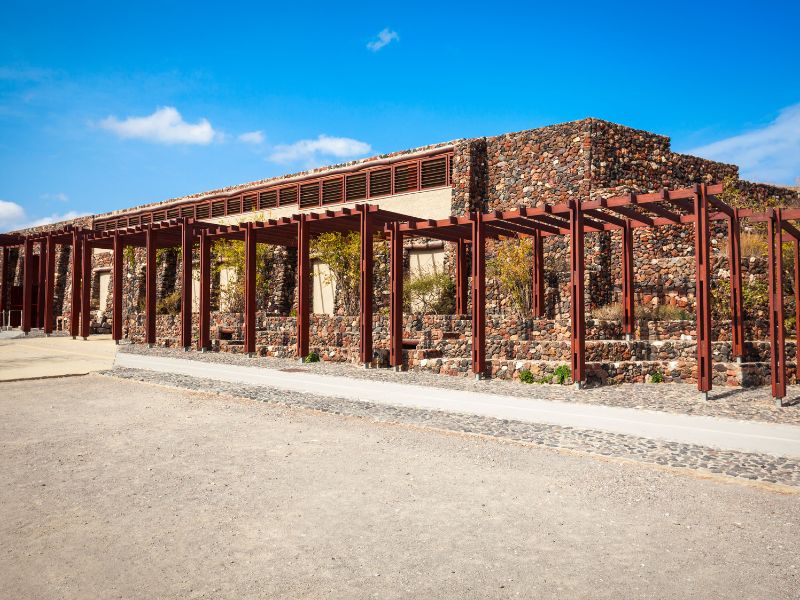
Walking through Akrotiri now means moving through a town that stopped, not one that was destroyed. The spaces still reflect movement, use, and intention.
Akrotiri before the eruption was shaped by ordinary life. That is what makes the site powerful today: not the disaster itself, but the everyday world that existed quietly before it disappeared.