Cart 0

Table of Contents
Introduction
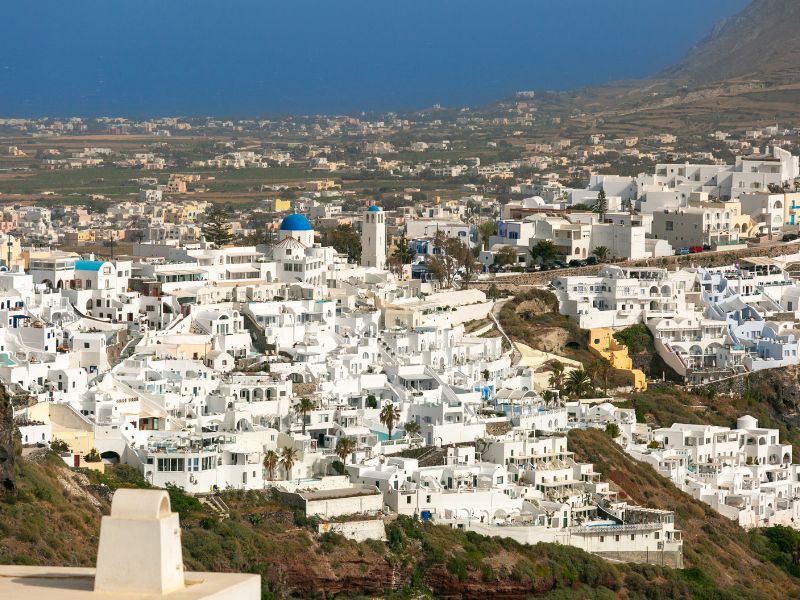
Santorini is usually framed through its caldera views and crowded sunset terraces. Yet beyond those familiar images lies another pace entirely. Megalochori in Santorini offers that shift. Here, movement slows. Conversations linger. Architecture and routine blend without trying to impress.
Walking through Megalochori in Santorini does not feel like ticking off sights. It feels closer to entering a space that continues to function as it always has. The alleys narrow, the light changes as it filters between walls, and small details begin to matter more than wide panoramas.
Megalochori in Santorini: A Village Shaped by History and Protection
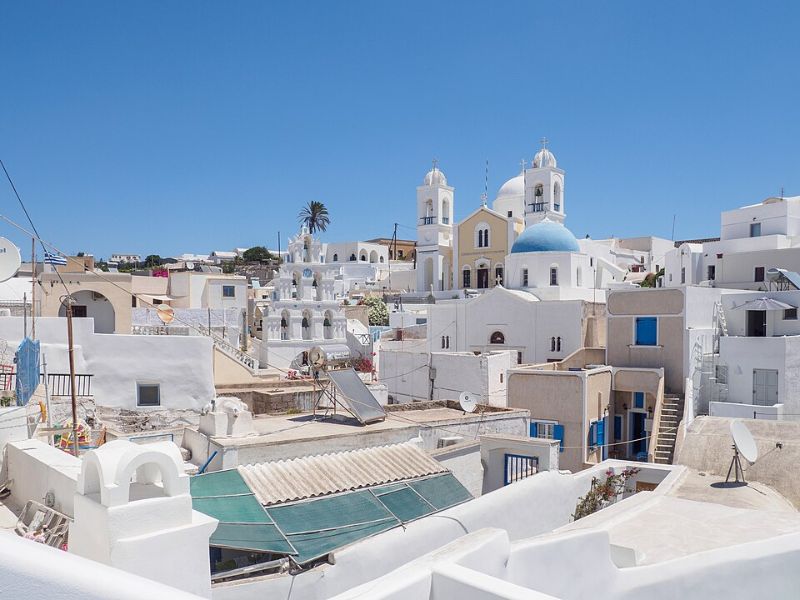
The walk often begins at the bell tower gate — a simple but unmistakable entrance. Step beneath it and the atmosphere changes almost immediately. Traffic noise fades. Footsteps echo differently. The village seems to close gently around you.
Megalochori in Santorini was not formed at random. Its layout reflects centuries of caution and adaptation. Pirate raids once threatened settlements throughout the Cyclades, and architecture became a form of protection. Homes were built tightly together. Alleys narrowed intentionally. Courtyards remained hidden from open view.
As you move deeper into the network of passages, the logic becomes visible. Corners turn sharply. Sightlines shorten. The beauty of the village is inseparable from its defensive design. It was built to protect its residents — and in doing so, it created intimacy.
Cave Houses and Captain Mansions: Layers of Architecture
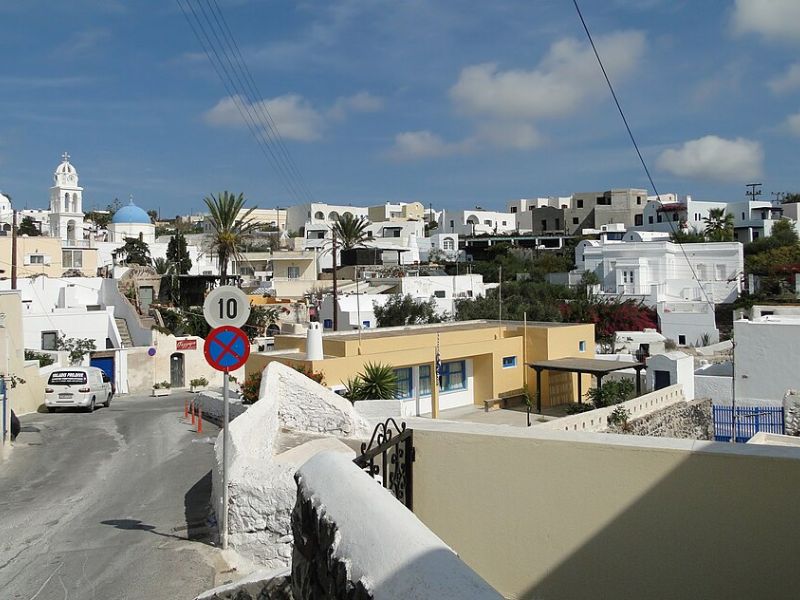
The buildings themselves tell another part of the story. In Megalochori in Santorini, many homes are carved directly into volcanic rock. These cave houses are not aesthetic choices; they are practical responses to climate. Thick walls hold steady temperatures, offering cool interiors during long summers and warmth when winds turn colder.
Then, almost unexpectedly, larger captain’s houses appear. These belonged to ship owners and wine merchants during the village’s more prosperous years. Their neoclassical details, spacious courtyards and elevated façades contrast with the simplicity of the cave dwellings.
The coexistence of these two architectural styles — modest and refined — gives the village depth. It reflects a community shaped by both ordinary labour and maritime success. Megalochori in Santorini carries both narratives at once.
Wine Culture and the Identity of Megalochori in Santorini
Wine has long defined life here. This is not a recent development shaped by tourism. The connection between land and production runs deeper. Traditional canava cellars, often built beneath homes, reveal how closely winemaking was integrated into daily life.
One notable stop is Gavalas Winery, where generations have maintained techniques adapted to Santorini’s volcanic soil. Indigenous grape varieties thrive in this environment, and underground spaces provide natural conditions for storage and ageing.
In Megalochori in Santorini, wine is less an attraction and more a continuation. It ties the present to the agricultural rhythms that sustained the village long before it appeared in travel guides.
Hidden Courtyards and the Quiet Rhythm of Village Life
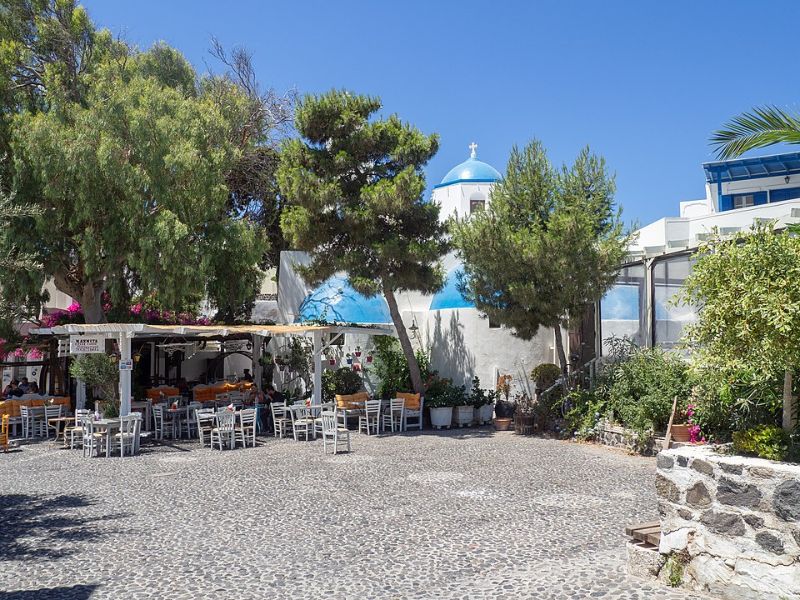
As you continue walking, there is no single focal point demanding attention. Instead, the experience unfolds in fragments. A wooden door left slightly open. A courtyard shaded by vines. A small chapel tucked between houses.
Bell towers rise above rooflines, offering vertical contrast to the enclosed alleys below. Light shifts constantly throughout the day, altering how the village feels from one hour to the next. Megalochori in Santorini does not rush its visitors. It allows space to pause.
The absence of urgency becomes part of the atmosphere. You move because the path invites you forward, not because a landmark compels you to arrive.
Discovering a Different Side of Santorini
By the end of the walk, Megalochori in Santorini feels distinct from the island’s better-known viewpoints. The experience is shaped by proximity rather than panorama, by texture rather than spectacle.
The village reminds visitors that Santorini’s identity is not limited to dramatic cliffs and sweeping views. It also resides in enclosed alleys, volcanic homes and traditions that continue quietly. Megalochori in Santorini offers a way to understand the island through observation and patience.
It is not defined by what it displays, but by how it lives.